Euphoria Season 3 Episode 4 Review – “Kitty Likes to Dance” Should Have Come With a Trigger Warning
Network: HBO
Where to watch: Sundays at 9 p.m. ET/PT on HBO and streaming on HBO Max
If you told me Euphoria Season 3 Episode 4, “Kitty Likes to Dance,” was going to be the darkest hour of the season so far, I still don’t think I would’ve been prepared. This episode pushes Rue deeper into Alamo’s world, sends Cassie chasing fame to pay off Nate’s mess, and gives us one of the most upsetting sequences the show has ever put on screen.
I’m not being dramatic when I say this one should have come with a serious trigger warning.
The Recap
The episode opens with Rue very much in over her head. The feds have her dead to rights: photos of her in Mexico meeting with the cartel, detailed knowledge of her fentanyl dealing, and a body count tied to that bad product. They break down the math for her – 20 years for possession, 20 years for every overdose – and make it clear that the only way out is to turn informant and help them get to Lori.
They swap her fanny pack for fake drugs and send her back into Alamo’s club to keep playing mule. She’s shaking, and Alamo clocks it immediately. He calls out her relapse, warns her about what the dope will do to her, and reminds her this is not supposed to be her path. Rue’s plot armor is doing overtime at this point; she survives situations other people in this world would not walk away from.
The introduction of Kitty is where the episode crosses a line for me. From the moment she shows up at the club, everything about the camera work and blocking screams “this is headed somewhere bad.” Alamo unbuckling his belt, her legs posed, the way the room is staged for the “choo‑choo” – it’s all shot as if we’re meant to be complicit spectators in something that feels a lot more like exploitation than necessary storytelling.
We don’t just hear about what happens to Kitty; we’re forced to watch it, and that’s where my patience snaps. This storyline could have landed just as hard, maybe harder, if more had been left implied.
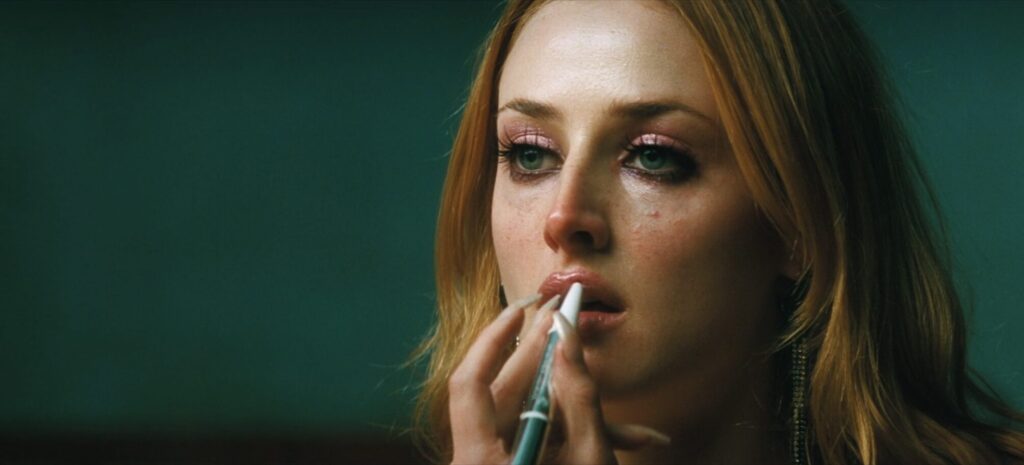
Rue sees the aftermath on the surveillance cameras and later finds Kitty in the bathroom, literally trying to clean herself and re‑do her makeup like she can scrub off what just happened. Rue asks the right questions at the wrong time: were you okay with that, did you want to do that, is someone forcing you? In a club where the walls have eyes and ears, this is chaos behavior.
Magic overhears the whole thing from inside a bathroom stall. Instead of protecting another woman in a dangerous environment, she runs straight to Big Dwayne and tells him she thinks Rue is a snitch. From there, everything escalates: the DEA is listening in on Rue’s phone, Lori’s crew in Barack Obama masks storms the place, and Big Dwayne ends up dead on the floor.
The racism and language in that raid sequence feel tacked on for edge rather than insight. Euphoria has already proven it can shock people with content and imagery; random slurs and caricatured masks don’t add anything thematically. They just make an already rough episode even harder to sit through.
By the end of the hour, Rue hasn’t delivered Lori, the club connection is blown, and the feds are going to have to pivot. The more interesting, underexplored story is the one the episode only brushes up against: the trafficking pipeline surrounding Alamo’s club and the Silver Slipper, the girls who “disappear” from rehab like Angel, and the way Kitty’s abuse is normalized as part of the business.
If Euphoria Season 3 wants to say something meaningful about exploitation, I hope it leans into that systemic rot instead of just replaying the trauma for shock value.
Cassie and Nate – happily never after
Over on the Nate side of the episode, our favorite human red flag is still recovering from losing and reattaching his pinky toe after last week’s chaos. He frames it as a metaphor: what’s dead may never die, broken things can be glued back together, and that’s how he sees his life. Cassie, correctly, points out that once something is severed, it never truly goes back to the way it was.
Nate owes serious money to very serious people – we’re talking close to a million dollars by his own fuzzy estimate. Cassie asks the right question: “How much do you owe them?” When he refuses to give a straight answer, she does something Season 1 Cassie never would have done: she packs her bags, walks out, and climbs into Maddie’s car. It’s not empowerment yet, but it’s progress.
Later, we watch Nate humiliate himself at a zoning commission meeting, trying to get approval for his development project. There’s an endangered flower blocking construction, and he goes from businessman to begging on his knees in record time. The council still denies him, telling him to get an environmental impact statement and try again. For a character who’s controlled everything for so long, watching him reduced to groveling is almost cathartic.
And yet, the real burden of his mess falls on Cassie.
Cassie chases virality – and the price tag on a million dollars
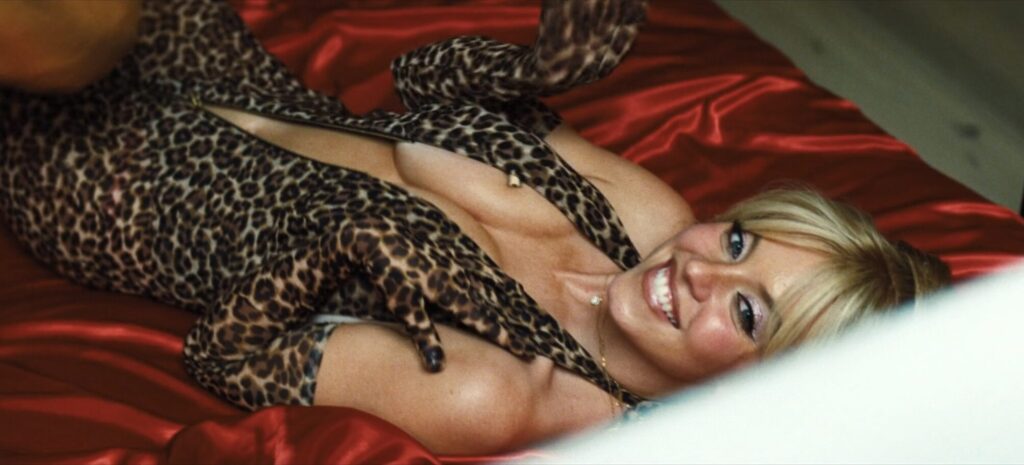
Maddie’s solution to the “Nate owes a million dollars” problem is simple: Cassie has to become a star. On social media, in nightlife, on OnlyFans – wherever the money is. She gets Cassie glammed up, stages a photoshoot, and lines up a meeting with an influencer type who can put Cassie in front of millions of eyes.
Maddie’s one rule is clear: don’t sleep with him. If you do, you’ll be just another girl he discards, not a brand he needs to keep calling back. Cassie goes into the club with that warning in her back pocket and a camera ready to catch every moment.
The night plays out like a cautionary tale: competing girls, drugs, a messy “party” that’s really just content creation fodder, someone getting sick in the corner while Cassie keeps performing, and Maddie orchestrating the chaos around the edges to make sure the right clips get posted. By the end, Cassie is positioned to go viral, but it’s clear she has no real control over where this road leads.
What worked for me about this plot is that Cassie finally seems to understand she isn’t in a fairy tale. She’s not the princess in the white dress anymore; she’s a product. The question is whether she’ll realize that in time to step off the ride, or if she’ll just keep telling herself this is “destiny” because it’s the only way to make Nate’s problems feel like a plan instead of a trap.
Lexi, Jules, and a very expensive art tantrum
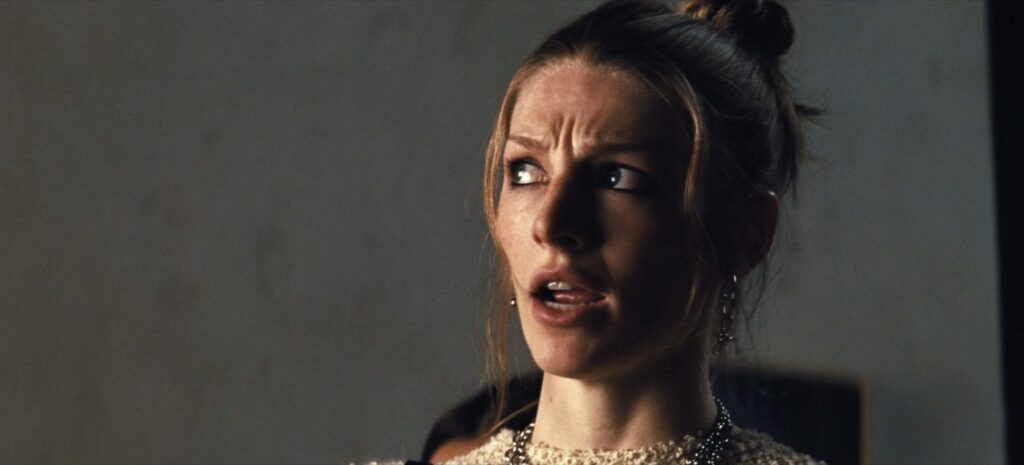
While Rue is playing informant and Cassie is playing influencer, Lexi is living my “trying to be a working writer in LA” nightmare. She’s on a real network TV set, working with a big actress, and trying to throw her friend a bone by hiring Jules to paint a mural for a show called LA Nights.
Jules turns in a piece that might be gorgeous in a gallery – ethereal beings with prominent body parts and a lot of gender‑fluid surrealism – but is wildly inappropriate for network TV decor. Standards and Practices is never clearing that wall. The studio has to halt filming, reschedule, and eat a six‑figure loss because they can’t shoot around it.
Instead of owning the mistake, Jules gets defensive. Her argument boils down to “this isn’t your private gallery,” flipped back on Lexi like Lexi is the problem. It’s pure entitlement, and it leaves Lexi holding the bag for an almost two‑hundred‑thousand‑dollar mistake.
The storyline feels like it’s supposed to be about Jules not feeling at home in this sanitized, corporate version of Hollywood, but the way it plays out just makes her look inconsiderate of her friend’s livelihood.
Final thoughts – did Euphoria go too far?
Euphoria Season 3 Episode 4 is technically impressive and thematically rich in spots, but the experience of watching it is rough. Between the “choo‑choo” sequence with Kitty, the masks, and the casual racism layered over everything, there’s a lot that feels designed to provoke rather than illuminate.
On the Sweet P meter, I’m giving this episode 1.5 out of 5 sweet peas. I can appreciate the commentary about bodily autonomy, survival, and the illusions of fame, but the way certain scenes are staged crosses the line from necessary to gratuitous for me. This should have come with a more explicit trigger warning for sexual violence and exploitation.
What I hope moving forward is that Euphoria Season 3 leans into exposing the trafficking and power structures around Alamo’s club and the Silver Slipper instead of just replaying trauma for shock. There is a strong story here about how girls like Kitty end up in these situations and how entire systems profit off them. If Rue is going to be pulled deeper into that world as an informant, I want the show to commit to taking that seriously.
Let’s talk
Did Euphoria Season 3 Episode 4 go too far, or do you think the graphic approach was necessary? How long do you think Rue can survive this DEA–Lori–Alamo triangle? And do you see Cassie’s new career path as empowerment, exploitation, or a messy mix of both?
Drop your thoughts in the comments.